


Brass vs Bronze vs Copper: What’s the Difference?
Copper, brass, and bronze are three of the most widely used non-ferrous metals in manufacturing, machining, casting, and industrial engineering. Although they may look similar at first glance, each material has unique properties, compositions, and applications that make it suitable for different industries.
Understanding the difference between brass, bronze, and copper can help engineers, buyers, and manufacturers select the right material for CNC machining, casting, forging, marine equipment, electrical systems, and decorative applications.
What Is Copper?
Copper is a pure metal known for its excellent electrical conductivity, thermal conductivity, and corrosion resistance. It has a distinctive reddish-orange appearance and is one of the oldest metals used by humans.
Key Properties of Copper
· Excellent electrical conductivity
· High thermal conductivity
· Strong corrosion resistance
· Soft and highly ductile
· Easy to form and machine
· Naturally antimicrobial
Common Applications of Copper
· Electrical wiring and connectors
· Heat exchangers
· Plumbing systems
· Busbars and transformers
· Refrigeration tubing
· Electronics and semiconductor components
Because of its conductivity, copper is widely used in electrical and electronic industries where performance and reliability are critical.
What Is Brass?
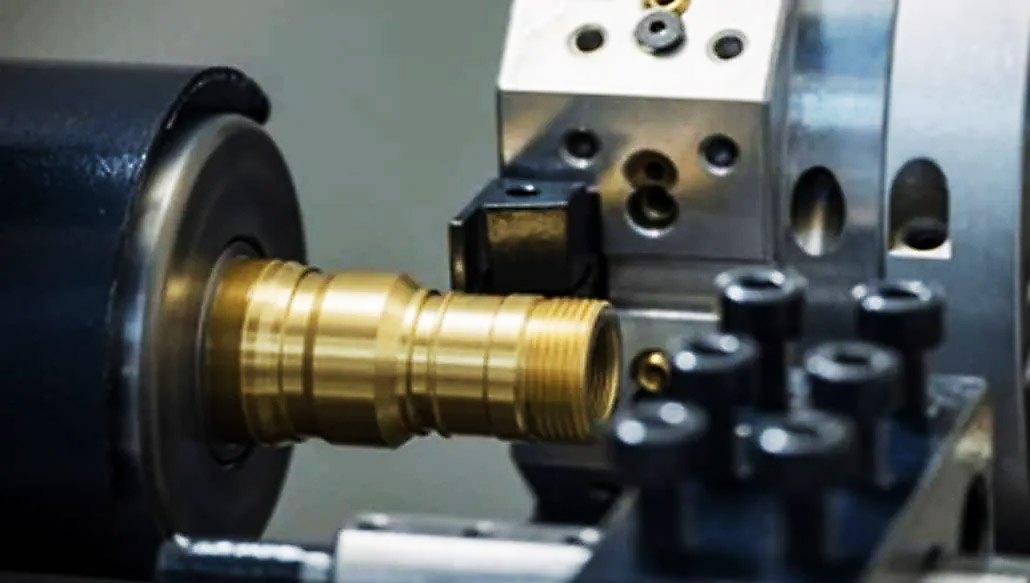
Brass is a copper-zinc alloy. By adjusting the zinc content and adding other alloying elements such as lead or aluminum, manufacturers can create different grades with improved strength, machinability, and corrosion resistance.
Brass is popular because it combines good mechanical strength with an attractive gold-like appearance.
Key Properties of Brass
· Good corrosion resistance
· Better strength than pure copper
· Excellent machinability
· Attractive yellow-gold color
· Good thermal conductivity
· Easy to cast and form
Common Applications of Brass
· Valves and fittings
· Plumbing components
· Decorative hardware
· Musical instruments
· Fasteners and connectors
· CNC machined parts
Advantages of Brass
Brass is easier to machine than many other copper alloys, making it ideal for high-volume CNC machining and precision components. It also offers excellent surface finish quality.
What Is Bronze?
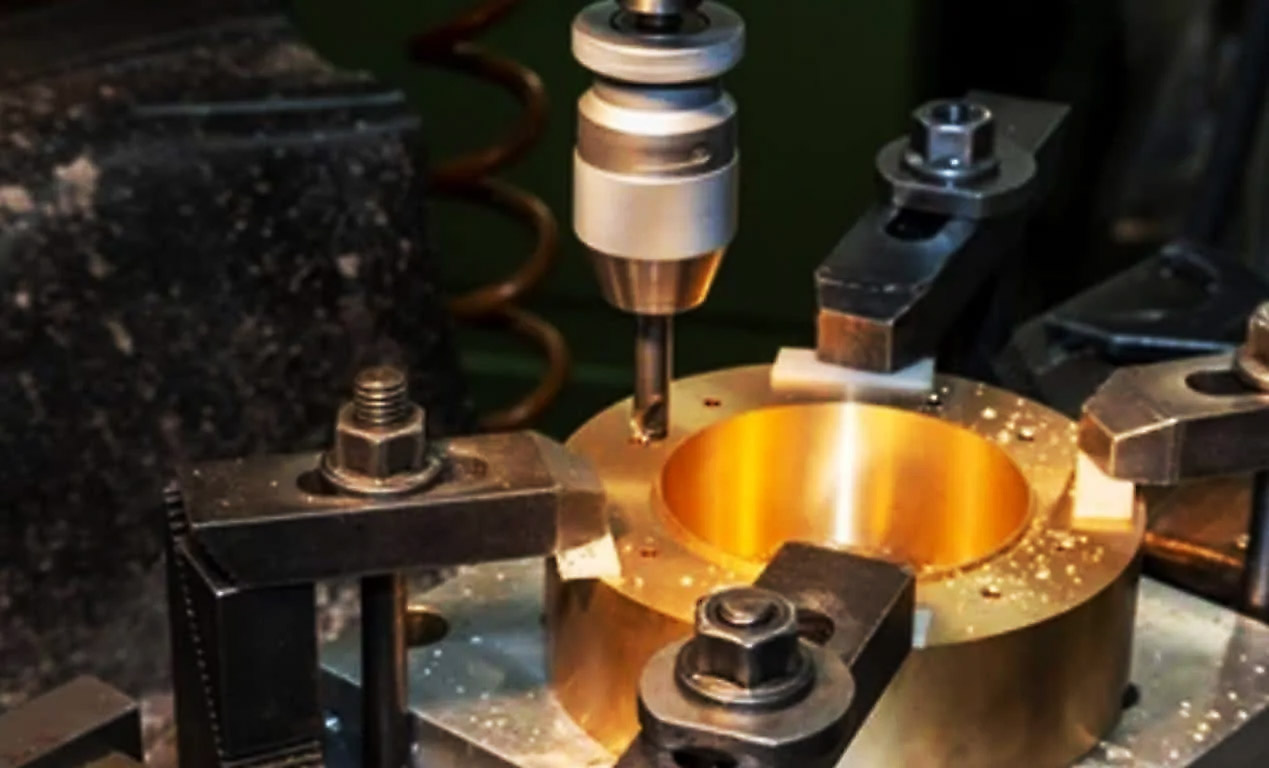
Bronze is primarily a copper-tin alloy, although modern bronze alloys may also contain aluminum, silicon, phosphorus, or nickel. Bronze is generally harder and more wear-resistant than brass.
It is highly valued in marine, heavy-duty, and bearing applications because of its excellent corrosion resistance and durability.
Key Properties of Bronze
· High strength and hardness
· Excellent wear resistance
· Superior seawater corrosion resistance
· Low friction characteristics
· Good fatigue resistance
· Long service life
Common Applications of Bronze
· Bearings and bushings
· Marine hardware
· Ship propellers
· Industrial gears
· Pump and valve components
· Sculptures and architectural parts
Brass vs Bronze vs Copper: Main Differences
1. Chemical Composition
Copper
Pure metallic element with minimal alloy additions.
Brass
Mainly copper + zinc.
Bronze
Mainly copper + tin, sometimes with aluminum, silicon, or phosphorus.
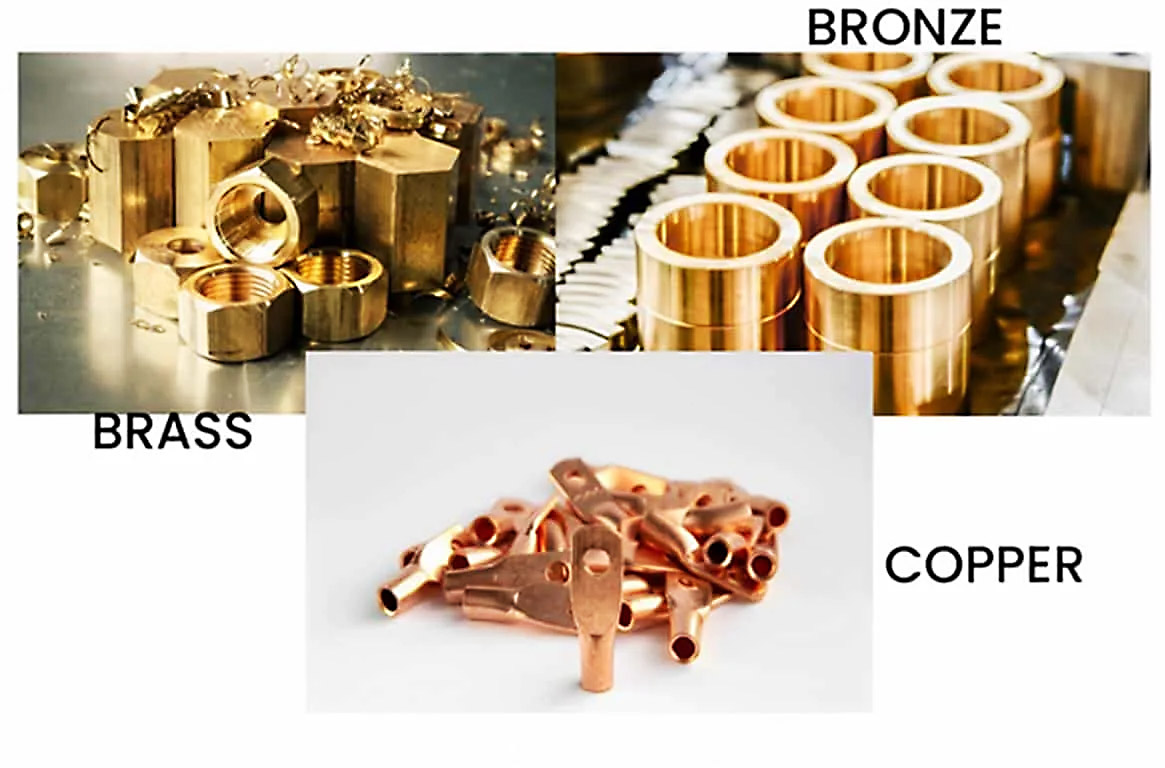
2. Color Appearance
Copper
Reddish-orange.
Brass
Bright yellow or gold-like.
Bronze
Darker brownish-gold appearance.
Color is often the easiest way to identify these materials visually.
3. Strength and Hardness
Among the three:
· Copper is the softest
· Brass offers balanced strength and machinability
· Bronze is generally the hardest and most wear-resistant
Bronze is preferred for high-load industrial environments, while brass is ideal for precision machining and decorative parts.
4. Corrosion Resistance
Copper
Good corrosion resistance in general environments.
Brass
Good atmospheric corrosion resistance but may suffer dezincification in seawater environments.
Bronze
Excellent corrosion resistance, especially in marine and saltwater applications.
For harsh marine conditions, bronze is usually the best option.
5. Electrical Conductivity
Copper has the highest electrical conductivity among the three metals.
Conductivity ranking:
① Copper
② Brass
③ Bronze
That is why copper dominates electrical and electronic industries.
6. Machinability
Brass is generally considered the easiest to machine.
Best for CNC Machining
· Brass: Excellent
· Bronze: Good
· Copper: Moderate
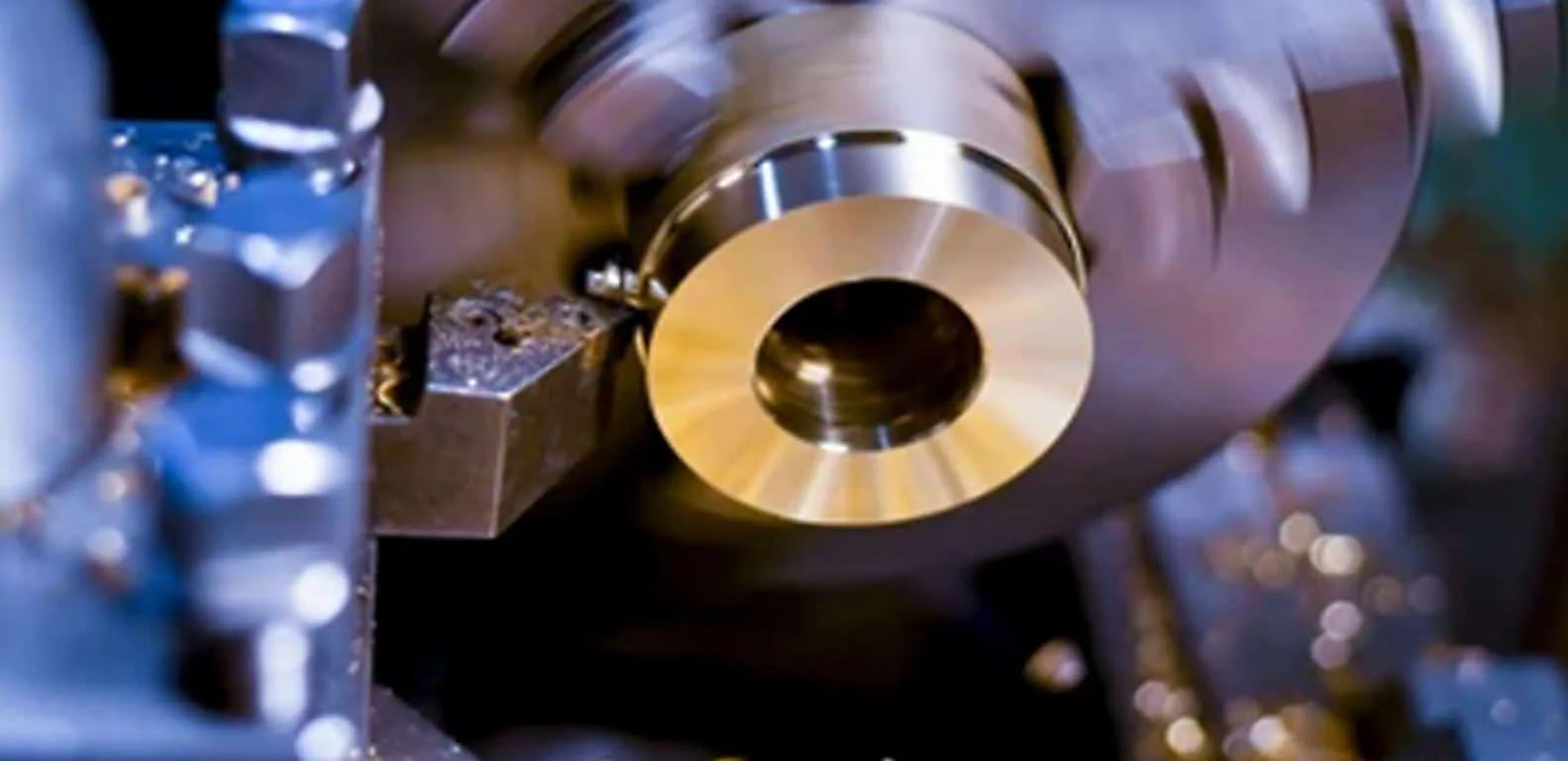
Brass alloys are widely used for precision CNC turned parts because they produce smooth finishes and stable cutting performance.
Common Industrial Uses
Copper:
Main Advantages:Electrical conductivity
Common Industries:Electronics, power systems
Brass
Main Advantages:Machinability & appearance
Common Industries:Plumbing, hardware, CNC machining
Bronze
Main Advantages:Wear & corrosion resistance
Common Industries:Marine, heavy machinery
How to Choose the Right Material
Choosing between brass, bronze, and copper depends on several factors:
Choose Copper If:
· Electrical conductivity is critical
· Thermal transfer is important
· You need high ductility
Choose Brass If:
· You need easy machining
· Appearance matters
· Cost efficiency is important
Choose Bronze If:
· Wear resistance is required
· The environment is corrosive
· Marine applications are involved
Brass, Bronze, and Copper in CNC Machining
In modern manufacturing, these copper-based alloys are commonly used in:
· CNC turning
· CNC milling
· Precision machining
· Sand casting
· Investment casting
· Forging processes
Each material behaves differently during machining, so selecting the proper alloy can improve tool life, surface finish, and production efficiency.
Conclusion
Although brass, bronze, and copper belong to the same copper alloy family, they offer very different mechanical properties, corrosion resistance, conductivity, and machining performance.
· Copper is best for conductivity.
· Brass is best for machinability and decorative applications.
· Bronze is best for strength, wear resistance, and marine environments.
Understanding these differences helps manufacturers and engineers choose the right metal for long-term performance and cost efficiency.
About T&B Manufacturing
At T&B Manufacturing, we specialize in custom metal parts and precision manufacturing solutions for global industrial customers.
Our capabilities include:
· CNC machining
· Investment casting
· Sand casting
· Forging
· Stainless steel fabrication
· Brass, bronze, copper, aluminum, and steel components
We provide high-quality OEM metal parts for industries including:
· Automotive
· Marine
· Construction
· Agricultural equipment
· Industrial machinery
· Energy systems
With strict quality control, advanced machining equipment, and export experience serving Europe and worldwide markets, T&B Manufacturing delivers reliable custom metal solutions tailored to your project requirements.
If you are looking for a trusted metal parts manufacturer for brass, bronze, copper, stainless steel, or alloy components, T&B Manufacturing is ready to support your business.