


3-Axis vs 4-Axis vs 5-Axis CNC Machining: Key Differences & How to Choose
In modern manufacturing, CNC machining plays a critical role across industries such as aerospace, automotive, medical devices, and industrial equipment.
Among all machining technologies, 3-axis, 4-axis, and 5-axis CNC machining are the most widely used. While they share the same foundation, their capabilities, precision, and cost vary significantly.
This guide will help you understand the differences between 3-axis, 4-axis, and 5-axis CNC machining, and how to choose the right solution for your project.
What Does “Axis” Mean in CNC Machining?
In CNC machining, an “axis” refers to the direction in which the cutting tool or workpiece can move.
- 3-axis → X, Y, Z (linear movement)
- 4-axis → X, Y, Z + 1 rotary axis
- 5-axis → X, Y, Z + 2 rotary axes
More axes mean:
✔ More flexibility
✔ Higher precision
✔ Ability to machine complex geometries
What Is 3-Axis CNC Machining?
3-axis CNC machining is the most basic and widely used method.
Features
- Movement along X, Y, Z directions
- Simple structure and easy operation
- Lower cost
Best For
- Flat parts
- Simple cavities and holes
- General machining tasks
Limitations
- Requires multiple setups for complex parts
- Cannot handle undercuts or complex angles
Keywords: 3-axis CNC machining, basic CNC machining, metal parts machining
What Is 4-Axis CNC Machining?
4-axis machining adds a rotary axis (usually A-axis), allowing the workpiece to rotate during machining.
Features
- Multi-angle machining in one setup
- Reduced repositioning
- Improved efficiency and accuracy
Best For
- Cylindrical parts
- Spiral grooves
- Angled surfaces
Limitations
- Still limited for highly complex geometries
Keywords: 4-axis CNC machining, rotary CNC machining, multi-angle machining
What Is 5-Axis CNC Machining?
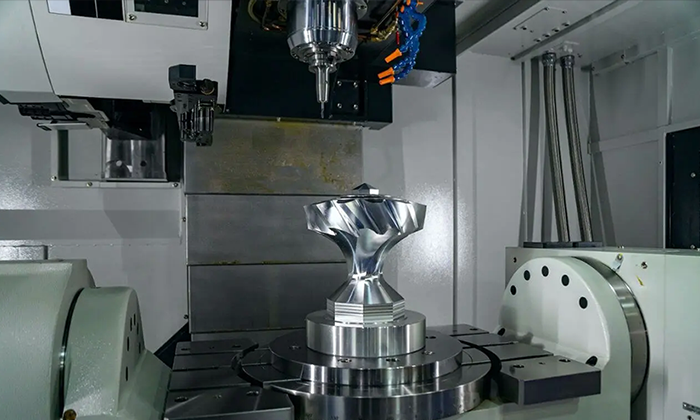
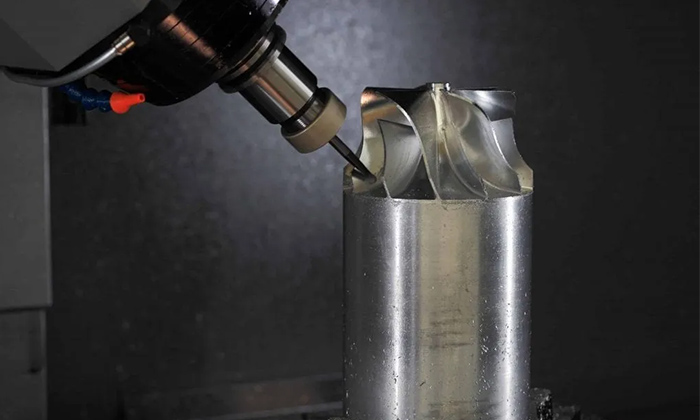
5-axis CNC machining is the most advanced technology, combining three linear axes + two rotary axes.
Features
- Full multi-directional machining
- One setup for complex parts
- Superior surface finish and accuracy
Best For
- Aerospace components
- Medical implants
- Complex molds and curved surfaces
Advantages
- Handles undercuts and deep cavities
- Reduces machining time
- Improves precision
Keywords: 5-axis CNC machining, precision machining, complex parts manufacturing
Key Differences: 3-Axis vs 4-Axis vs 5-Axis CNC
1. Machining Capability
- 3-axis: Simple parts
- 4-axis: Multi-angle parts
- 5-axis: Complex geometries and curved surfaces
2. Precision
- 3-axis: Standard precision (±0.01mm)
- 4-axis: Improved accuracy
- 5-axis: High precision (up to ±0.005mm)
3. Efficiency
- 3-axis: More setups required
- 4-axis: Fewer setups
- 5-axis: One-time machining
4. Programming Complexity
- 3-axis: Easy
- 4-axis: Moderate
- 5-axis: Advanced CAM programming required
5. Cost
- 3-axis: Lowest cost
- 4-axis: Medium investment
- 5-axis: Highest cost but best performance
How to Choose the Right CNC Machining Method
Choosing between 3-axis, 4-axis, and 5-axis CNC machining depends on your project needs:
Choose 3-Axis If:
- Parts are simple
- Budget is limited
- No complex angles required
Choose 4-Axis If:
- Multi-side machining is needed
- You want higher efficiency
- Parts have cylindrical or angled features
Choose 5-Axis If:
- Parts are complex or high-precision
- You need tight tolerances
- You want to reduce setups and improve quality
Conclusion
3-axis, 4-axis, and 5-axis CNC machining each serve different roles in manufacturing:
- 3-axis → cost-effective for simple parts
- 4-axis → improved flexibility and efficiency
- 5-axis → advanced solution for complex, high-precision components
Understanding these differences helps manufacturers optimize cost, efficiency, and product quality.
T&B — Professional CNC Machining Partner
At T&B, we provide high-quality CNC machining services, including:
- 3-axis, 4-axis, and 5-axis CNC machining
- Precision metal parts manufacturing
- Custom components for aerospace, automotive, and medical industries
- Prototype to mass production support
Why Choose T&B?
- Advanced CNC equipment and skilled engineers
- Tight tolerance control and consistent quality
- Fast turnaround and global delivery
- Competitive pricing with reliable service
Whether you need simple machined parts or complex precision components, T&B helps you achieve the right balance between quality, speed, and cost.