


Titanium Alloys: Types, Grades, Key Properties, and Industrial Applications
Titanium and its alloys are widely used across aerospace, medical, automotive, marine, and high-performance engineering industries. Their outstanding strength-to-weight ratio, corrosion resistance, and biocompatibility make them one of the most valuable modern engineering materials.
To enhance performance for different applications, pure titanium is frequently alloyed with other elements such as aluminum, vanadium, molybdenum, chromium, and nickel. These combinations create titanium alloys with unique mechanical, physical, and chemical characteristics.
This article provides a complete overview of titanium alloy types, compositions, properties, and the industries where they are used.

What Are Titanium Alloys?
Titanium alloys are materials made by combining pure titanium with alloying elements to improve strength, flexibility, heat resistance, fatigue resistance, or corrosion performance. Common alloying elements include:
● Aluminum (Al) – improves strength, hardness, and corrosion resistance
● Vanadium (V) – increases tensile strength and thermal stability
● Molybdenum (Mo) – enhances wear resistance, corrosion resistance, and reduces elastic modulus (important for biomedical use)
● Chromium (Cr) – improves tensile properties and oxidation resistance
● Nickel (Ni) – creates shape-memory titanium (NiTi) and enhances corrosion performance
● Zirconium (Zr) – boosts biocompatibility and mechanical strength
● Niobium (Nb) – improves toughness and soft-tissue compatibility
● Each element modifies the microstructure of titanium, resulting in alloy families with distinct performance profiles.
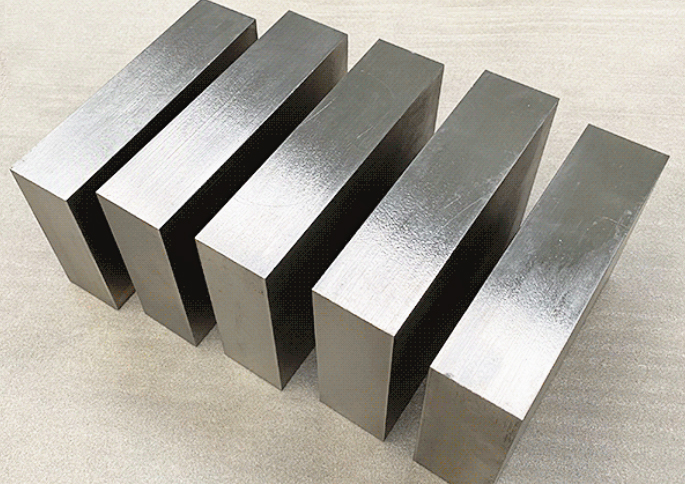
Common Types of Titanium Alloys
Titanium alloys are generally divided into three categories:
1. Alpha (α) Titanium Alloys
Characteristics:
● Excellent corrosion resistance
● Good weldability
● Stable at high temperatures
Used in: Aerospace structures, chemical processing equipment, and high-temperature components.
2. Alpha-Beta (α-β) Titanium Alloys
The most widely used titanium alloy category.
Ti-6Al-4V (Grade 5) is the most popular alloy globally.
Characteristics:
● High strength
● Good ductility
● Excellent fatigue performance
● Easy to process and heat-treat
Used in: Aerospace fasteners, compressor blades, offshore components, surgical implants.
3. Beta (β) Titanium Alloys
Characteristics:
● Highest strength levels
● Excellent formability
● Good hardenability
● Suitable for heavy-duty structural parts
Used in: Landing gear, springs, deep-sea equipment, high-strength industrial parts.
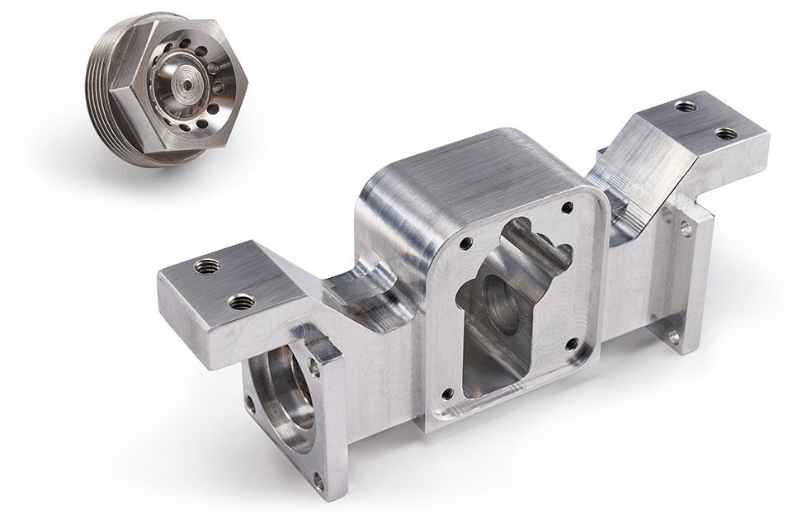
Material Properties of Titanium Alloys
1. Titanium alloys are valued because they offer a combination of properties unmatched by most metals.
● High Strength-to-Weight Ratio Titanium alloys have a density of about 4.5 g/cm³, nearly half that of steel, yet they achieve tensile strengths between 600–1200 MPa.
This allows engineers to design lightweight, high-strength components.
● Excellent High-Temperature Resistance Titanium alloys maintain structural integrity at temperatures up to 500°C, far exceeding aluminum alloys (limited to below 200°C).
● Exceptional Corrosion Resistance Titanium naturally forms a strong oxide film that protects it against:
Seawater; Chlorides;Acids;Oxidizing environments
This makes titanium alloys a top choice in aerospace, marine, and chemical processing applications.
2. Biocompatibility
Titanium alloys are non-toxic, non-reactive, and well-accepted by the human body. This makes them ideal for surgical implants and medical instruments.
3. High Fatigue & Crack Resistance
Titanium alloys absorb vibration and resist crack propagation, which is critical for aerospace structure.
Conclusion
Titanium alloys offer an unmatched balance of strength, weight, corrosion resistance, heat resistance, and biocompatibility. These properties allow them to outperform steel, aluminum, and nickel alloys in demanding environments across aerospace, medical, marine, and modern consumer industries.
As technology advances and manufacturing costs decrease, titanium alloys will continue to play a central role in lightweight engineering, precision manufacturing, and next-generation materials science.
T&B — Custom Titanium Alloy Manufacturing & Precision Engineering
At T&B, Whether you need CNC-machined titanium parts, titanium alloy forging, precision casting, welding services, prototype development, or full-scale OEM production, our engineering team ensures exceptional quality, tight tolerances, and reliable performance.
If you are looking for lightweight, corrosion-resistant, and high-strength titanium components, T&B can deliver tailor-made solutions that meet global standards and support your project from concept to production.