


Laser Welding: What You Need to Know
In the past, traditional welding methods—like arc welding—relied on heavy heat input and physical contact. They got the job done, but often at a cost: warped materials, messy work surfaces, and slower production. It felt like using a sledgehammer where a scalpel would do.
Today, welding has stepped into a new era. Among the modern technologies reshaping manufacturing, laser welding stands out as one of the most precise, efficient, and clean solutions available.
How Laser Welding Actually Works
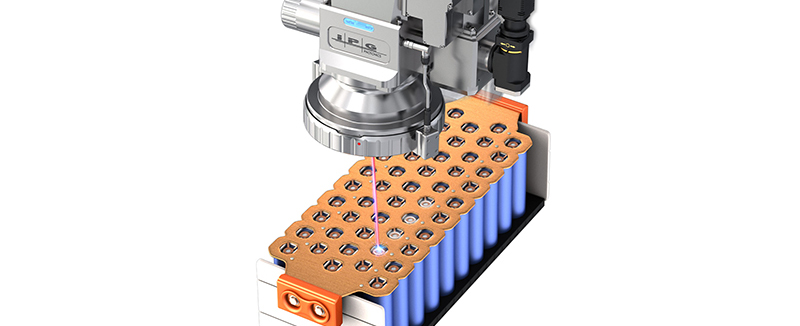
Imagine using a magnifying glass to focus sunlight into a sharp, powerful point. Laser welding follows the same principle—except the light is far more concentrated and controlled.
Here’s how the process flows:
1. Preparation: Getting Everything in Place
Materials are aligned with the accuracy of fitting puzzle pieces.
Clamping prevents gaps, ensuring the laser meets the joint exactly where it should.
A flawless alignment is the foundation of a flawless weld.
2. Aiming the Laser
The laser beam is directed at the joint line with pinpoint precision.
Its power level and beam diameter can be tuned based on material thickness and penetration depth.
Modern fiber lasers, transmitted through fiber-optic cables, offer superior beam quality.
3. Instant Melting
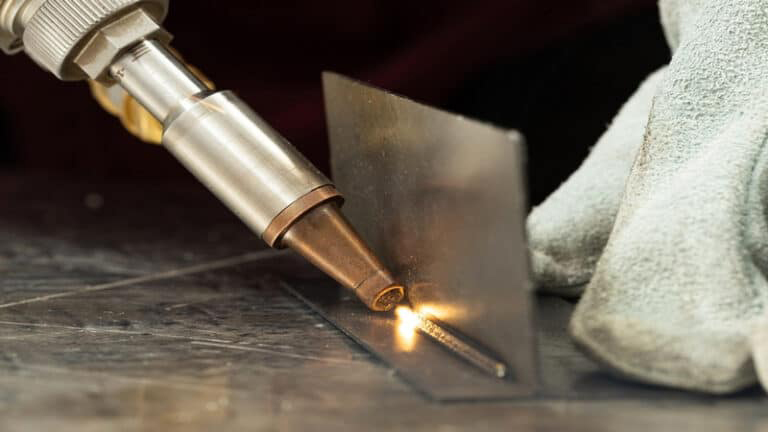
Once the laser hits the metal, intense energy creates a tiny molten pool.
Because the laser concentrates heat on a very small area, the surrounding metal remains cool—minimizing distortion.
4. Creating the Joint
The laser travels along the seam, continuously melting and bonding the materials.
Some applications may use filler, but often the laser alone is enough.
The high power density means faster welding speeds and higher productivity.
5. Rapid Cooling
After the beam moves forward, the metal solidifies almost immediately.
This rapid cooling greatly reduces warping, bending, and other thermal defects.
6. Final Inspection
Once complete, the weld is inspected for porosity, distortion, or structural defects to ensure reliable strength.
The Science Behind the Beam
Laser welding is essentially the art of converting energy into an ultra-focused point of heat.
Because the beam acts on a tiny surface area, heat transfer is extremely controlled—resulting in smaller heat-affected zones (HAZ) compared to traditional welding.
This precision is especially valuable for thin components, such as those in electronics, sensors, and medical devices.
Why More Manufacturers Are Turning to Laser Welding

● High Precision
It can handle micro-scale parts and tight geometries that traditional welding simply can’t manage.
● High Speed
Fast welding speeds boost productivity and reduce operating costs—crucial for competitive manufacturing.
● Minimal Distortion
With localized heating, parts keep their shape, making post-processing almost unnecessary.
● Versatile Material Compatibility
From stainless steel to aluminum and nickel alloys, laser welding works across a wide variety of metals—even dissimilar ones.
● Non-Contact & Highly Automatable
The laser never touches the material.
No physical wear.
Perfect for automated and remote welding setups.
Frequently Asked Questions
What materials can be laser welded?
Most industrial metals:
mild steel, stainless steel, aluminum, high-carbon steels, nickel alloys—and in some cases, even plastics.
Is laser welding better than arc welding?
It depends.
Laser welding wins in precision, speed, heat control, and weld quality.
Arc welding may still be more economical for applications that don’t require this level of performance.
How thick can materials be?
Laser welding excels on thin materials.
With high-power lasers and keyhole welding techniques, thicker materials can also be processed—but may require slower speeds or multiple passes.
Final Thoughts
Laser welding delivers cleaner joints, higher accuracy, and faster production—no surprise it has become a preferred choice across automotive, electronics, medical, and precision manufacturing industries.
Customized Welding Solutions? T&B Provides Professional Support
If you're searching for reliable, high-efficiency, and fully customizable welding solutions, T&B is here to support your project from start to finish. We offer:
● Customized laser welding project planning
● Material and process optimization
● Support for both small-batch and large-scale production
● Advanced welding solutions for complex or high-precision components
With T&B, you get stable quality, higher productivity, and welding solutions tailored to your exact needs.